THE HONEY BADGER
The honey badger is considered the most fearless and most aggressive animal on earth.


THE HONEY BADGER
The honey badger is considered the most fearless and most aggressive animal on earth.

January 26, 2021
Astronomy, Physics, Sciencefacts
No comments


"on a black hole, gravity pulls so extreme that it ends up sucking(like a hole) any matter found near it territory, including any traces of light rays, making it appear as black at the center"
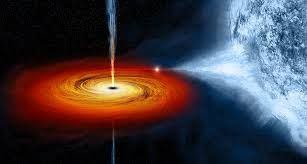

In accordance to that, it was thus observed that when a neutron star(a very dense, heavy type of star) finally becomes too massive and its gravity becomes too much to handle, the star collapses on itself and explodes leaving behind a black hole.
Black holes were never seen or observed by scientists with ordinary space telescopes that were used to detect light and other space radiations. Even after years of studying, research, argument, etc. It continued to remain a hypothetical prediction.
Astronomers and astrophysicists however we're only able to deduce the presence of a black hole on space by detecting it gravitational effect on nearby stars and objects. For example, when a star or other interstellar objects crosses a black hole, they will be teared apart and drawn inward Not long after the invention of the event horizon telescope that astronomers were now able to photograph the first image of a black hole.


If you've ever observed a street light at night or turn on your porch light during the dark, what you'll probably notice is some bunch of insects flying and swimming around the light source, and the most intriguing part of it is that they just keep on making endless circles around the light. These insects often ranges from small beetles to bugs or even moths.
So why are insects attracted to light an why do they just keep circling around and around like that. Let find out.


January 02, 2021
Naturescience, Sciencefacts, wildlife
No comments


When it comes to the amount of toxin found in a venom, the Inland Taipan is by far the most venomous snake in the world. Being nicknamed as the "fierce snake", a single bite from an Inland Taipan can deliver a maximum of 110mg of it venom, being so toxic enough to kill at least 100 adult humans or 250 thousand mice. Although being so venomous, it has less defensive disposition unlike it counterpart "the coastal Taipan" and it shy by nature. Hence very few humans have been bitten and no human death has ever been recorded from an Inland Taipan.
VENOM REVIEW
Rating : Extremely toxic


January 02, 2021
Naturescience, Sciencefacts, wildlife
No comments

A lot of factors contribute to how deadly an animal is, these factors can include; size, bite force, speed, aggressiveness, weapon effectiveness, tactical skills, etc. For example, a cheetah can take advantage of it super speed to outrun and kill preys over long distances and also escape from other more powerful rivals (like the lion), and the crocodile can deploy both it stronger bite force and aggressiveness to make a firm grip on tougher preys and devour them.
Let explain three of these factors briefly:
The size and relative weight of an animal serves as an advantage, both in attacking other species, or defending itself from potential harm from rivals or predators. Size is always associated with strength, stamina, and intimidation. An animal having a larger size and weight is more capable of withstanding a pound for pound combat with another animal because of it ability to hold it ground. Larger species generate influence around other species, maneuver their tactics, and crush them. Take an elephant for instance. The only predator known to attack the elephant is the lion. But it takes a full pride of lions to bring down a full grown elephant, unlike an antelope or a zebra.
Bite force measures the amount of pressure exerted by an animals bite. A single bite from some animals can cause lots of damages to the body, including tearing the flesh apart or even breaking the bone. It all depends on the amount of pressure given by the bite. Animals with strong bite forces are also capable of making a firm and lasting grip on their victims, especially ones with a strong repellant force and impulsive abilities. Preys who are highly impulsive in motion(like the wild beast) or agile enough do often flip theirselves out and escape from the teeths of predators with a relatively weaker bite force, but that will be an impossible mission coming to predators with stronger bite force.
Below is a countdown list of the 10 most deadliest animals in the world, based on the above factors and statistics.

Though species like the Inland Taipan or the king cobra are dangerous thanks to their respective venoms, the black mamaba is especially deadly due to its speed and aggression. Found in the savannas and rocky areas of southern and eastern Africa, the species (which can grow up to 14 feet long) is the fastest of all snakes, slithering at speeds of up to 12.5 miles per hour, which makes escaping one in remote areas that much more difficult. Thankfully, black mambas usually only strike when threatened—but when they do, they’ll bite repeatedly, delivering enough venom (containing neuro- and cardiotoxins) in a single bite to kill ten people. And if one doesn’t receive the correlative antivenin within 20 minutes, the bites are almost 100 percent fatal.
Some factoids :
(Black Mamba)
I have added this link to a youtube video of a mamba killing a lion. You will see how, even after the lion saccumbs to the mamba’s venom, mamba keeps watch, and then after returns to strike repeatedly to make sure lion king is indeed dead.

Cape Buffalo , which number around 900,000 and are found in sub-Saharan Africa, are a relatively mild species when left alone, preferring to travel in massive herds to graze in early morning and late afternoon hours or to gather around watering holes to stay hydrated. However, if an individual (or its calf) is threatened or wounded, they become the incarnation of their nickname: Black Death. Reportedly responsible for killing more hunters on the continent than any other creature, these behemoths, which can grow up to nearly six feet tall and weigh close to a ton, circle and stalk their prey before charging at speeds of up to 35 miles per hour. They’re even known to continue charging no matter where they’re injured, and will not hesitate to attack moving vehicles. You don’t want to mess with those horns.


Does that crocodile care that it is killing a small impala? Does it care a mother could be grieving or a baby is snatched to death before its time?
No. Reptiles don’t care for niceties like that.
They have no mercy. They’re not built for mercy. They’re unable to conceive of mercy and you know what? They have lived for hundreds of millions of years longer than primate
Alright, prepare yourself for the centipede chow-fest:
Alright, you get the idea.
Y’see, while, say, a lion stalks prey, analyzes it to see if it’s dangerous or not, and then decide to go in for the kill, centipedes aren’t as complex - and that’s what makes them frightening. When they smell prey, they just barrel towards it and attack, regardless of how big or dangerous it is. They’ll attack or eat just about anything that moves. They’re not monsters - that’s just how they’re wired. They’ll investigate any foreign scent and test-bite it, too, which is why they also eat carrion and rarely fruit.
They attack using their venomous claws - these modified legs stab into the prey and inject venom while the centipede wraps its body around the animal, trying to subdue it with its legs and keep it from struggling. If you’re lucky, the venom kills you not too long after. If you’re not lucky?
The centipede just eats you while you lay there helpless, even while you’re still alive.
Being eaten by a centipede isn’t very pleasant. They pull their prey apart with their venom claws and leisurely munch on it- this can occur even while the poor animal writhes about in pain.
So yeah. If I were to be eaten by any animal, I wouldn’t choose a centipede. Not at all.

You might think that polar bear are land mammals, but that is not entirely true — in fact, they are considered to be aquatic mammals: they are the best swimmers of all land-animal-like mammals, and can easily swim a thousand miles (!!) without going to land. They can swim for a full week without stopping.
So in the water, nothing is safe from these fuckers as well.
Take beluga. What ? YES: beluga whales. Measuring up to 5.5 meters and weighing almost two tons.
Polar bear LOVE these guys. So they spot breathing holes in the ice, and wait. Until some beluga cannot wait any longer, and tries to catch a breath.
Big mistake !
If the polar bear cannot pull them out, they jump right in and hunt under water. No problem. Beluga taste too damn good !


Do you want to talk blubber. Do you really want to talk blubber ?
Think WALRUS. Males have giant tusks, and can weigh up to 4,400 pounds. Polar bear love to invite these blubbers to a nice romantic dinner !
Blubber, blood, skin, hair — what a feast !


In both material science and mineralogy, hardness refers to the property of a material which enables it to resist plastic deformation, induced either by penetration, indentation, or scratching. It is the measure of resistance to scratching or abrasion of one material to another or simply the ability of a material to resist damage.
Hardness is an important property of a material and it often determines what it can be used for. Certain substances prove harder than another when subjected to mechanical indentation or scratching. For example, materials made from ceramic can withstand high temperatures and resist non-elastic scratching than plastic materials.
There are many ways in which the hardness of a material can be measured. These tests are often empirical, based on experiments and observation rather than fundamental theory. Most of these testing process involves the material being subjected to either scratching or indentation.
In scratching, the most common method is the used of the Mohs scale and the instrument used in measuring the absolute hardness is called the sclerometer. The higher the absolute hardness, the greater it resistance to scratching and vice versa. The mohs scale of mineral hardness is a qualitative ordinal scale, based on the ability of one sample of mineral to scratch another mineral visibly. The higher a mineral is on the mohs scale, the more resistance it is to be scratched by another mineral. In other words, minerals having a higher number on the mohs scale can visible create a non-elastic deformation on minerals lower on the mohs scale.
Below is a brief review of the top ten strongest minerals on earth, based on the mohs scale.
<inforgraphics>
10. TALC
Talc is a type of clay mineral mined from the earth, composing of hydrated magnesium sulfate with the chemical formula .... Talc usually appears as greenish, whitish, greyish and even as a colorless rocky material. Talc is mostly used in cosmetic and personal care products, ranging from baby powders to eye shadows. The widely known talcum powder is gotten from a finely crushed talc. Talc is also the softest mineral on the earth.

Talc has a mohs hardness of 1 and an absolute hardness of 1.
9. GYPSUM
gypsum is a naturally occurring mineral of hydrated calcium sulfate with the chemical formula .... Gypsum is mostly found in layers of sedimentary rocks and as deposits from volcanic eruptions. They are used to make fertilizers and it also serves as the main ingredient in different forms of plasters, chalks and cement.

Gypsum has a mohs hardness of 2 and an absolute hardness of 2.
8. CALCITE.
Calcite is a pure form of calcium carbonate(...) that serves as a principal constituent of other minerals such as limestone, chalk, and marble. They are found in all sedimentary, metamorphic and igneous rocks and it one of the most common mineral on the earth.

Calcite has a mohs hardness of 3 and an absolute hardness of 14.
7.FLUORITE
Fluorite or fluorspar is a naturally occurring mineral of calcium fluoride(..). It mostly unique in it variable color spectrum, existing as blue, black, purple, brown, pink, green, etc. Fluorites are formed mostly in by the hydrothermal activities of igneous rocks and limestone.
Fluorite has a mohs hardness of 4 and an absolute hardness of 21.
6. APATITE
Apatite is a general name given to a group of phosphate minerals which possesses similar chemical composition and physical structure. They contain elements like fluorine, chlorine and hydrogen existing as fluorapatite, chlorapatite and hydroxaptite and having a high concentration of OH, F and CL ions, respectively in their crystals. They're mostly used as fertilizers because of their high phosphorus content.
Apatite has a mohs hardness of 5 and an absolute hardness of 48.
5. FELDSPAR
Feldspar is a general name given to a large group of rock-forming silicate or tectosilicate minerals. Feldspar is the most abundant group of silicate minerals and in turn, it is also the most abundant group of minerals found in the earth's crust, making up as much as 50-60% of the earth's crust.
It possesses the chemical formular ... and just like the apatite group, feldspar minerals have very similar structures, chemical compositions, and physical properties and they can be found in igneous, metamorphic and in most sedimentary rocks.
Feldspar has a mohs hardness of 6 and an absolute hardness of 72.
4. QUARTZ
Quartz is naturally occurring mineral and a chemical compound composed of silicon and oxygen. It is the second most abundant mineral in the earth's crust(second to feldspar) and the most abundant mineral on the earth's surface.
Quartz is the the major building blocks of most igneous rocks like granite, and felsic. It is also very common in sedimentary rocks like schist and gneiss.
Quartz has a mohs hardness of 7 and an absolute hardness of 100.
3. TOPAZ
Topaz is a crystalline mineral of the silicate group, with a chemical formula of .... Topaz is widely used as a gemstone in jewelry and other ornaments. It is the hardest mineral in the silicate group, occurring as crystal pegmatites in silicic rocks such as granite and rhyolite.
Topaz has a mohs hardness of 8 and an absolute hardness of 200.
2. CORUNDUM
Corundum is a very hard natural mineral composed of crystalline form of aluminium oxide with the formula ... It also contains traces of impurities of metals such as titanium, vanadium, and chromium. Corundum is a rock forming mineral found in igneous, metamorphic and sedimentary rocks.
Corundum also exist as two types of gemstones, namely; ruby and sapphire.
Corundum has a mohs hardness of 9 and an absolute hardness of 400.
1. DIAMOND
Diamond is crystalline mineral, composed of a pure form of the element carbon. It is the hardest natural substance ever known to man and also has the highest thermal conductivity than any other substance.
Diamond has a mohs hardness of 10 and an absolute hardness of 1600.
The science core is a leading online platform aiming at delivering the best collection of sciencific, technical, and medical research and discoveries in the world straight to you.


